Key Takeaways
- Payroll automation significantly reduces manual errors and administrative time, freeing up resources for core business activities.
- Automated systems stay updated with labor laws and tax regulations, enhancing compliance and reducing regulatory risk.
- Integration with other HR tools enables holistic, data-driven management, ensuring more intelligent decision-making throughout the business.
- Automation enhances scalability, transparency, and employee experience, enabling businesses to remain more agile in a rapidly changing environment.
Managing payroll has long been considered one of the most tedious and critical administrative challenges for businesses of all sizes. In the past, manual payroll processes often required hours of careful preparation, systematic double-checking, and extensive paperwork to ensure that each employee was paid correctly and on time. This type of labor-intensive work not only leads to frustration among payroll staff but also increases the likelihood of errors and delays. Mistakes in payroll, such as inaccurate wage calculations, incorrect deductions, and late payments, can erode employee trust and morale, potentially resulting in high turnover. Compliance issues resulting from manual errors can lead to severe penalties and negative publicity for the organization. As the workforce evolves and grows, these challenges only become more cumbersome. In recent years, however, payroll automation has emerged as a true game-changer, revolutionizing how companies address these persistent issues. Automation provides scalable payroll services for growing businesses offering not only greater efficiency but also robustness to meet the diverse demands of modern organizations, thereby making the entire payroll landscape more manageable and reliable.
The transformation driven by payroll automation enables payroll teams to focus on value-added activities instead of repetitive calculations and paperwork. By automating wage calculations, deductions, and tax payments, businesses are discovering new efficiencies that enable them to operate with reduced administrative burden and increased strategic focus. Improved accuracy and compliance ensure that businesses can avoid costly mistakes, penalties, and disputes arising from payroll errors. Instead of being bogged down by repetitive tasks, HR professionals can contribute to higher-level initiatives such as talent development, employee engagement, and organizational growth. Automation also delivers peace of mind, as business owners and managers can trust that their payroll operations are accurate, compliant, and up-to-date. Ultimately, this leads to lower operational costs and a more satisfied, motivated workforce—two critical components of any successful business.
Enhanced Efficiency and Time Savings
One of the most visible impacts of payroll automation is an increase in efficiency across the board. Businesses that have adopted automated payroll technologies have reported eliminating many hours previously spent on manual data entry and supervision. Automation eliminates repetitive data entry, manual calculations, and post-payroll corrections, enabling HR teams to redirect their focus toward retention, recruitment, and engagement strategies. Modern automated platforms maximize productivity through features like automated scheduling, instant payroll processing, and digital document management. Technologies such as cloud payroll software, self-service employee portals, and secure mobile access enable HR teams and employees to manage payroll matters from anywhere, at any time, thereby significantly reducing bottlenecks and inefficiencies. This shift not only supports a hybrid and remote workforce but also empowers organizations to process payroll in a fraction of the time it previously took. Reports have shown that organizations adopting automation have experienced not just time savings, but also substantial cost reductions and fewer operational bottlenecks.
Improved Accuracy and Reduced Errors
Error-prone manual payroll processes often result in miscalculations, leading to incorrect pay or missed payments, which can harm morale and create compliance headaches. Even a minor arithmetic error or a missed data entry can result in a significant payroll discrepancy, triggering a chain reaction of adjustments, reimbursements, and strained employee relations. Payroll automation mitigates these risks through advanced calculation engines and real-time integration with attendance, benefits, and tax information, ensuring that wage calculations account for every relevant factor, from overtime to holiday pay. Automated systems are also designed to update regulatory changes instantly, minimizing delays and errors that often occur during manual updates. Notably, a study revealed that a significant percentage of organizations utilizing traditional payroll processes experienced costly payroll errors annually, resulting in financial losses and wasted time. Automation provides both a safeguard against such issues and a foundation for more reliable payroll management, assuring organizations that their payroll is consistently accurate and compliant.
Streamlined Compliance with Labor Laws
Keeping up with evolving tax rules and labor laws is a significant challenge for any business, particularly those with employees operating across multiple jurisdictions. The complexity of varying tax rates, social security contributions, and statutory benefits can overwhelm even the most experienced payroll professionals. Automated payroll solutions provide built-in compliance tools that automatically apply the correct taxes, deductions, and reporting requirements based on employee data and location. Regular software updates, pushed directly from payroll providers, keep payroll teams informed about legislative changes, such as the SECURE 2.0 Act, which introduced new rules regarding retirement plan participation. Automated systems turn regulatory headaches into straightforward, automated checks—helping businesses stay confident in meeting their legal obligations, avoiding costly penalties, and reducing the administrative burden associated with ongoing compliance management.
Integration with Other HR Tools
Today’s leading payroll automation platforms rarely operate in isolation. Seamless integration with time tracking, benefits management, and performance evaluation systems creates a unified environment for workforce data, allowing information to flow automatically between HR functions. These integrations eliminate the need for manual data entry and reduce the risk of inconsistent records, which can often occur when systems are disconnected. AI-driven features can proactively identify anomalies—such as missing timesheets, unusual deductions, or pay inconsistencies—drastically reducing the need for human intervention and catching potential issues before they escalate. This interconnectedness enhances reporting, budgeting, and strategic planning across the whole HR function, enabling leaders to make well-informed decisions based on accurate, real-time data.
Increased Transparency and Employee Satisfaction
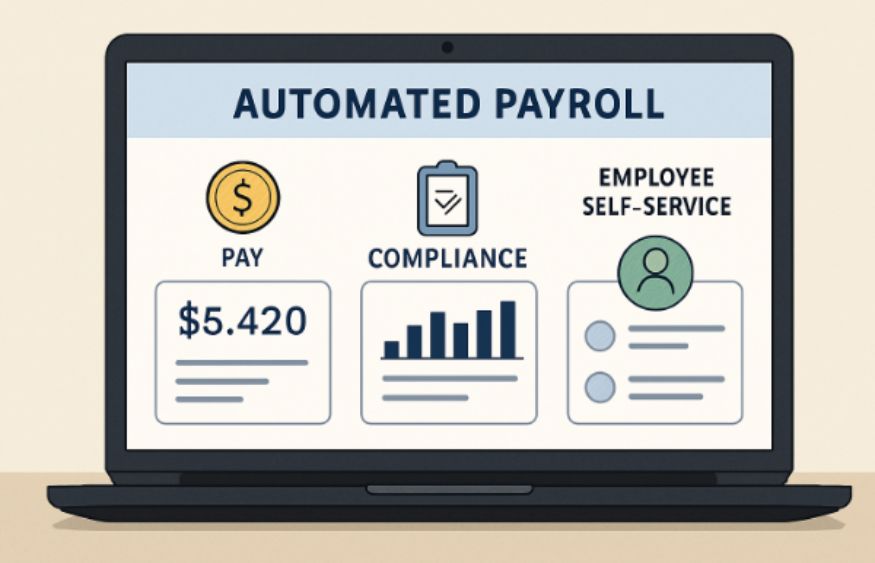
Trust is foundational to employee satisfaction—especially when it comes to payroll. Automated systems offer transparency through self-service portals, where employees can independently access pay stubs, update personal details, and view benefits enrollment, eliminating the frustrating opacity of traditional processes. This increased visibility resolves uncertainty and instills confidence in the payroll process, as employees can see exactly how their compensation is calculated. Additionally, self-service capabilities reduce the administrative workload on HR teams, as employees no longer need to submit requests or wait for responses to access payroll information. This accessibility improves retention and engagement, reducing questions about payroll and granting employees greater control over their financial wellness, which is increasingly seen as a vital part of overall employee well-being.
Cost Savings and Scalability
Eliminating labor-intensive hours from the payroll process results in substantial cost savings for businesses. Payroll automation solutions are also inherently scalable, meaning that as companies expand—adding locations, employees, or benefits—automated platforms can adapt quickly, processing increased volumes without the need for additional HR staffing. This flexibility offers a financial advantage to growing organizations, enabling them to optimize productivity without incurring additional headcount or infrastructure costs. For businesses operating on a national or international scale, automation streamlines multi-state or cross-border payroll administration, ensuring processes remain streamlined and consistent. As a result, the organization can focus on growth and innovation, knowing that the payroll function will easily handle expansion without introducing new risks or complexities.
Conclusion
Payroll automation has shifted workforce management from a reactive, error-prone process to a proactive, streamlined practice rooted in accuracy and compliance. As workplace regulations continue to evolve and demands on HR professionals grow, embracing automation is quickly becoming a necessity for organizations aspiring to be agile, efficient, and employee-focused. Companies that invest in payroll automation lay the groundwork for sustainable business growth and a happier, more productive workforce, ensuring long-term success in a complex, fast-changing business world.