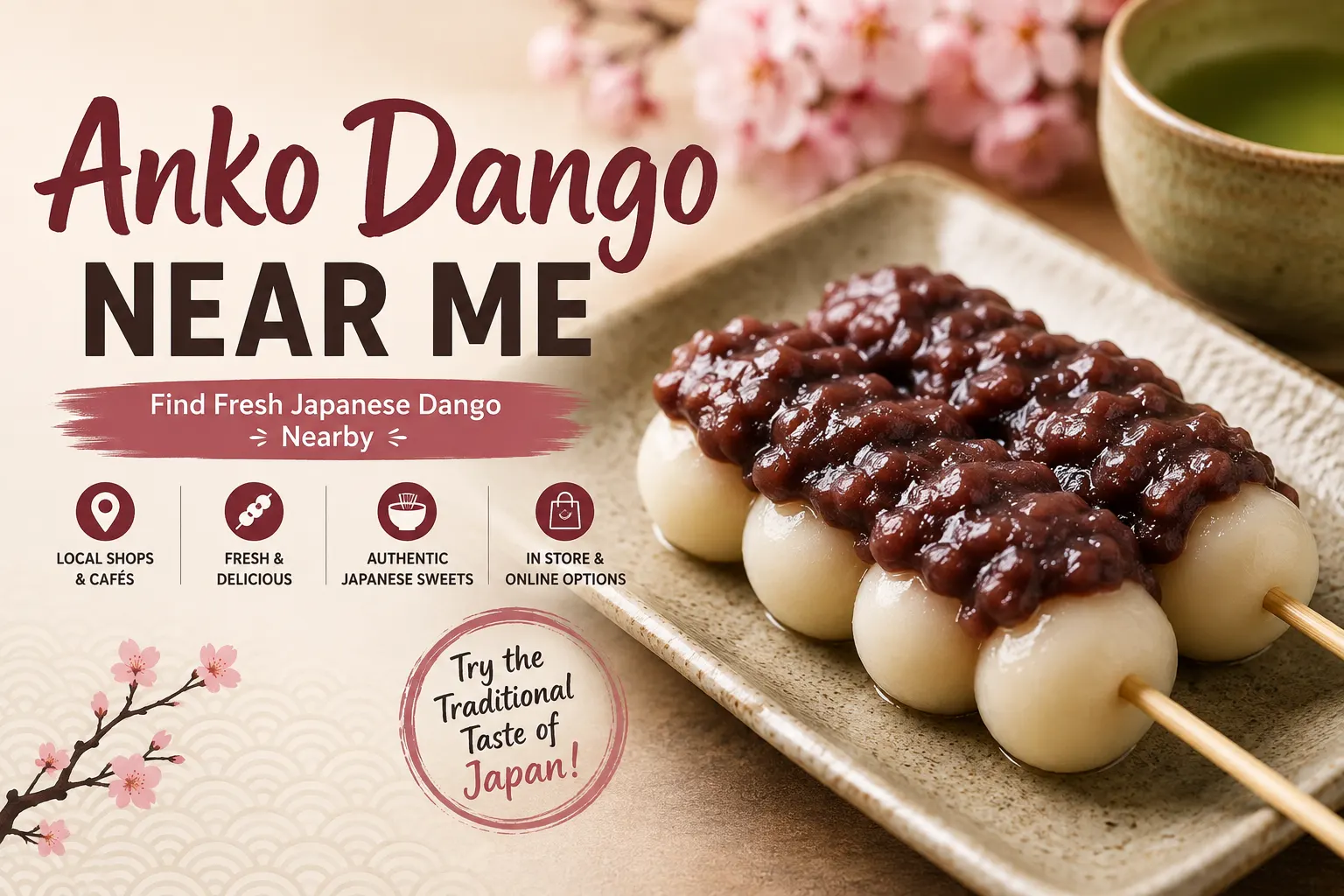
If you’re searching for anko dango near me, you’re probably looking for a traditional Japanese dessert that is chewy, lightly sweet, and full of authentic flavor. Anko dango combines soft rice-flour dumplings with anko, a sweet red bean paste made from azuki beans.
Unlike rich cakes or heavily sweetened desserts, anko dango has a simple combination of textures and flavors. The chewy dango provides a soft, satisfying bite, while the sweet azuki bean paste adds a smooth, slightly earthy sweetness.
Dango is a traditional Japanese wagashi and is commonly served on bamboo skewers. It can be found at Japanese sweet shops, cafés, restaurants, specialty food stores, supermarkets, festivals, and other places that offer Japanese desserts.
If you’re wondering where to find anko dango near you, what it tastes like, how it differs from mochi, and how to choose good-quality dango, this guide covers everything you need to know.
What Is Anko Dango?
Anko dango is a Japanese sweet made from small, round rice-flour dumplings topped or served with sweet red bean paste called anko.
The dumplings have a characteristic chewy texture and are commonly placed on a skewer. The anko is made primarily from cooked azuki beans and sugar. Depending on the preparation, the bean paste may be smooth or slightly chunky.
The combination is simple:
- Soft and chewy rice-flour dango
- Sweet azuki red bean paste
- A mild, naturally earthy bean flavor
- A satisfying contrast between chewy dumplings and smooth paste
For people discovering Japanese desserts for the first time, anko dango is an easy introduction to traditional wagashi.
Why Search for Anko Dango Near Me?
Searching for “anko dango near me” usually means you want to find the dessert locally rather than make it at home.
Depending on your location, you may find anko dango at:
- Japanese dessert cafés
- Japanese restaurants
- Wagashi shops
- Asian bakeries
- Japanese grocery stores
- Asian supermarkets
- Specialty Japanese food stores
- Japanese cultural festivals
- Food markets and seasonal events
Fresh dango is particularly worth looking for because its soft, chewy texture is an important part of the experience. Japan Guide notes that dango is best eaten fresh.
Read : Where Can You Buy Italian Pasta Online?
Where Can I Find Anko Dango Near Me?
If you want to find anko dango near me, start with businesses that specialize in Japanese food or traditional sweets.
1. Japanese Dessert Cafés
Japanese cafés are one of the best places to look for traditional desserts. Cafés that serve matcha, hojicha, Japanese tea, or wagashi may also offer dango.
Try searching:
“Japanese dessert café near me”
or
“Japanese sweets near me.”
Some cafés serve dango as a standalone dessert, while others pair it with matcha or another Japanese tea.
2. Japanese Restaurants
Some Japanese restaurants offer traditional desserts alongside sushi, ramen, udon, and other dishes.
Check the dessert section of the menu or contact the restaurant before visiting, because dango availability can vary.
3. Japanese Bakeries and Wagashi Shops
Specialty Japanese sweet shops can be particularly useful when you’re looking for authentic wagashi.
Wagashi includes a wide variety of traditional Japanese sweets, and anko is one of the most important ingredients used in Japanese confectionery.
4. Asian Supermarkets
If you cannot find fresh anko dango, check Asian supermarkets and Japanese grocery stores.
Some stores may carry:
- Frozen dango
- Refrigerated Japanese desserts
- Packaged dango
- Anko red bean paste
- Japanese rice-flour products
Availability varies by store, so checking the product section or calling ahead can save time.
5. Japanese Festivals and Cultural Events
Japanese cultural festivals can be another opportunity to find traditional dango.
Dango has strong connections with Japanese seasonal traditions and festivals. Different varieties are enjoyed during events such as cherry-blossom viewing and moon-viewing celebrations.
You may like to know : SDMS PX IndianOil Login: Dealer Portal, eDealer_ENU & Guide
How to Search for Anko Dango Near Me
A simple Google or Maps search for “anko dango near me” is a good starting point, but you can also use related searches.
Try:
- Anko dango near me
- Japanese dango near me
- Japanese desserts near me
- Japanese sweets near me
- Wagashi near me
- Red bean dango near me
- Dango dessert near me
- Japanese dessert café near me
- Matcha and dango near me
- Japanese bakery near me
- Asian dessert shop near me
Adding your city or neighborhood can make the results more specific.
For example:
“anko dango in [city]”
or
“Japanese sweets near [neighborhood].”
What Does Anko Dango Taste Like?
Anko dango has a relatively mild sweetness compared with many Western desserts.
The dango itself has a subtle rice flavor and a soft, chewy consistency. The anko provides most of the sweetness and adds an earthy flavor from azuki beans.
Anko can be made in different textures. Koshian is smooth and finely processed, while tsubuan retains pieces of the cooked bean.
If you enjoy desserts such as red bean mochi, dorayaki, or taiyaki, there’s a good chance you’ll enjoy anko dango as well.
Anko Dango vs. Mochi: What’s the Difference?
Anko dango and mochi are often confused because both are chewy Japanese sweets.
However, they are not exactly the same.
Dango is made into small dumplings from rice flour and is commonly boiled or steamed before being placed on a skewer.
Mochi is traditionally made by pounding cooked glutinous rice into a smooth, stretchy rice cake.
The two can also use similar fillings or toppings, including anko, which makes the distinction even harder for beginners.
A simple way to remember it is:
Dango = small chewy rice-flour dumplings
Mochi = pounded glutinous rice cake
Both are worth trying, but the texture and preparation are different.
You may like to read : HRMS Globex: Login, Employee Portal, Features, Attendance, Payroll & Complete Guide
Popular Types of Dango to Try You may like to read : HRMS Globex: Login, Employee Portal, Features, Attendance, Payroll & Complete Guide
Anko dango isn’t the only variety of Japanese dango.
Mitarashi Dango
Mitarashi dango is covered with a glossy sweet-and-savory soy-based sauce. It is one of the most recognizable varieties of dango.
Hanami Dango
Hanami dango is associated with cherry-blossom viewing and is traditionally presented in pink, white, and green.
Matcha or Cha Dango
This variety incorporates green tea flavor into the dango and can be paired with anko.
Kinako Dango
Kinako is roasted soybean flour with a nutty, slightly earthy flavor. Dango coated with kinako offers a different taste from anko dango.
Sesame Dango
Sesame-based versions provide a richer, nutty flavor and are another option for people who want something different.
Trying several varieties is one of the best ways to understand why dango is such a versatile Japanese sweet.
What Should You Look for When Buying Anko Dango?
If you find several options while searching for anko dango near me, consider these factors before ordering.
Freshness
Fresh dango should have a soft and chewy texture. Older dango can become firmer and lose some of the texture that makes the dessert enjoyable.
Anko Quality
Look for dango made with genuine azuki bean paste. If the menu provides information about whether the shop uses smooth koshian or chunky tsubuan, you can choose based on your preference.
Preparation
Freshly prepared dango can provide a different experience from frozen or packaged products.
Reviews
Before visiting a new dessert shop, look at recent customer reviews and photos. Reviews can help you determine whether customers enjoyed the texture, sweetness, portion size, and overall quality.
Menu Variety
If you’re trying dango for the first time, a shop offering several varieties can be a good choice. You may be able to compare anko, mitarashi, matcha, and other flavors.
What Is Anko Made From?
Anko is a sweet red bean paste traditionally made from azuki beans and sugar. Depending on the style, the beans can be processed into a smooth paste or left partially intact.
The two commonly discussed styles are:
Koshian: Smooth and finely strained red bean paste.
Tsubuan: Chunkier red bean paste that retains pieces of the bean.
Anko is widely used throughout Japanese confectionery, including dango, mochi, dorayaki, taiyaki, and other wagashi.
Is Anko Dango Sweet?
Yes, but the sweetness is generally balanced by the mild flavor of the rice dumplings.
If you prefer extremely sweet desserts, anko dango may taste more subtle than cakes, pastries, or heavily sweetened Western desserts.
If you enjoy lightly sweet desserts with interesting textures, anko dango can be an excellent choice.
Related Post : OptimistIndia Com: Positive News, Inspiring Stories & What You Should Know
What Should You Drink With Anko Dango?
Green tea is one of the classic drinks to enjoy with dango.
Good pairings include:
- Matcha
- Sencha
- Hojicha
- Genmaicha
- Japanese black tea
- Coffee
The slight bitterness and roasted flavors of Japanese tea can balance the sweetness of anko. Dango and green tea are a particularly traditional combination.
Can You Make Anko Dango at Home?
Yes. Anko dango can be prepared at home with relatively simple ingredients.
The basic components include rice flour, water, and sweet red bean paste. The dough is formed into small balls and cooked before being served with anko.
You can also customize homemade dango with different toppings such as:
- Matcha
- Kinako
- Sesame
- Sweet soy glaze
- Different styles of anko
If you enjoy Japanese cooking, making dango at home can be a fun way to explore traditional wagashi.
Fresh Anko Dango or Packaged Dango: Which Is Better?
It depends on what you’re looking for.
Fresh dango is usually the better option if texture and authentic preparation are your priorities.
Packaged or frozen dango can be convenient when there isn’t a Japanese dessert shop nearby.
When buying packaged dango, check the ingredients, storage instructions, preparation directions, and expiration date.
If you’re specifically searching for the best anko dango near me, fresh preparation is generally worth prioritizing.
Why Is Anko Dango Popular?
Anko dango combines several qualities that make Japanese desserts distinctive:
- Simple ingredients
- Soft, chewy texture
- Moderate sweetness
- Traditional preparation
- Azuki bean flavor
- Attractive presentation
- Easy-to-eat skewer format
Dango has also become more visible internationally as Japanese food and culture have gained popularity around the world.
Traditional Japanese sweets are often enjoyed with tea and can vary by region, season, and occasion.
Frequently Asked Questions About Anko Dango
What is anko dango?
Anko dango is a Japanese sweet consisting of chewy rice-flour dumplings served with sweet azuki red bean paste.
Where can I find anko dango near me?
Look at Japanese dessert cafés, wagashi shops, Japanese restaurants, Japanese bakeries, Asian supermarkets, and Japanese cultural events. Searching Google Maps for “anko dango near me” or “Japanese sweets near me” can help locate nearby options.
Is anko dango the same as mochi?
No. Both are chewy Japanese sweets, but dango is made as small rice-flour dumplings, while traditional mochi is made from pounded glutinous rice.
What does anko taste like?
Anko is sweet, smooth or slightly chunky, and has a mild earthy flavor from azuki beans.
Is anko dango served hot or cold?
Serving styles vary by type and shop. Fresh dango may be served at room temperature, warm, or grilled depending on the preparation.
How many pieces are usually on a dango skewer?
The number can vary by region and preparation. Three or four dumplings per skewer are common, while some traditional regional styles use five.
What is the best drink with anko dango?
Matcha and other Japanese green teas are classic choices because their flavor pairs well with the sweetness of anko.
Can I buy anko dango online?
Yes. Depending on your location, Japanese grocery stores and specialty food retailers may sell frozen or packaged dango. Always check storage and preparation instructions before ordering.
Final Thoughts: Finding the Best Anko Dango Near Me
If you’ve been searching for anko dango near me, you’re looking for more than just another dessert. Anko dango is a simple but distinctive Japanese sweet that combines chewy rice-flour dumplings with sweet azuki bean paste.
Start by checking Japanese dessert cafés, wagashi shops, Japanese restaurants, bakeries, and Asian supermarkets in your area. Search for related terms such as Japanese sweets near me, wagashi near me, and Japanese dessert café near me to expand your options.
When choosing where to try it, prioritize freshness, authentic ingredients, customer reviews, and shops that specialize in Japanese desserts.
Whether you’re discovering dango for the first time or already love Japanese sweets, a fresh skewer of anko dango paired with Japanese tea is a simple way to experience a classic part of Japanese food culture.