Reverse address lookup is a digital device that has become a necessity for anyone who wants to verify property details, identify the owner, learn the facts about the neighbourhood, and prevent fraud. These tools can bring fast and organised information to a homeowner, buyer, renter, landlord, online seller, or just a person who is interested in a place. Numerous sites also offer the reverse address lookup at no cost, whereas the high-quality services are provided with higher accuracy and valid information.
What is Reverse Address Lookup?
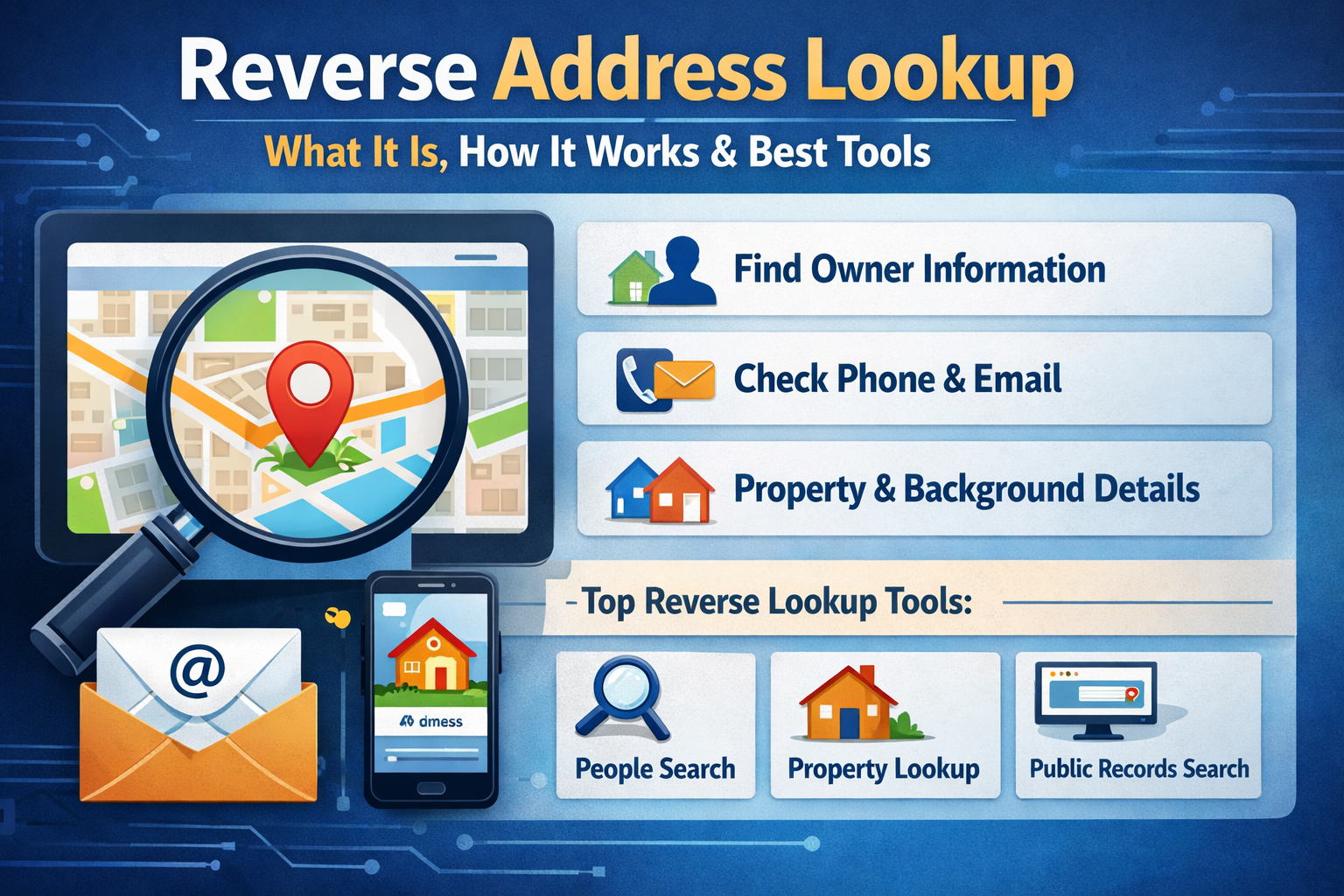
Reverse address lookup refers to the procedure in which you enter the address of a house/property into a web application to access valuable publicly available information with regard to the property. This is in contrast to people search, where you would start with the name of a person before discovering things like ownership history, type of property, history of the residents, and at times even the neighbourhood. This makes it very useful for verification, research, and safety.
How Reverse Address Lookup Works
The reverse address lookup tools are based on gathering information from various credible sources and integrating it into a systematized report. These platforms scan:
- Public property databases
- Government and county land records
- Real estate listings and registries
- Postal and telecom directories
Free vs Paid Reverse Address Lookup
Both free and paid tools exist, but they differ significantly in depth and reliability.
Free Reverse Address Lookup
Free tools are useful when you just want quick insights. They generally provide:
- Basic property details
- Limited ownership visibility
- General geographic or neighborhood context
However, free tools may lack detailed records and may not update frequently.
Paid Reverse Address
Paid tools are oriented at users who have to be compensated by precise, validated, and detailed reports. They usually include:
- Complete owner information
- Previous owner or resident history
- Valuation, mortgage, and tax records
- Contact details (when legally allowed)
Types of Reverse Address Lookup Services
A reverse address look-up system is not the same. Various platforms are constructed with various purposes that include:
- Property ownership lookup tools
- Public record and background data tools
- People search engine
- Real estate analytics platforms
- Business and address verification tools
Other companies only provide property-related services, whereas some of them access identity insights, address insights and background insights into a single solution.
Read : RndCoin KR: Redefining Blockchain Education and Community-Driven Crypto Innovation
Information You Can Find Using an Address
Reverse address search free may provide an unexpectedly broad spectrum of helpful information. Users can find:
- Property owner names or registered residents
- Type of house, age, and construction details
- Market valuation, taxes, and mortgage records
- Previous sales history and transaction details
- Neighborhood statistics, safety indicators, and nearby facilities
Best Reverse Address Lookup Tools (Updated)
A reliable source of data requires a reliable tool. The best reverse address lookup services that today are considered to be the best include:
-
BeenVerified – https://www.beenverified.com/ — People search, background checks & reverse lookups.
-
Whitepages Reverse Address Lookup – https://www.whitepages.com/ — Directory & reverse address/phone lookup.
-
Spokeo – https://www.spokeo.com/ — People search engine and data aggregator.
-
PeopleFinder – https://www.peoplefinder.com/ — People search and public records lookup.
-
TruthFinder – https://www.truthfinder.com/ — Deep background & person info reports.
-
Intelius – https://www.intelius.com/ — People search, background checks & reverse lookup.
-
SearchPeopleFree – https://www.searchpeoplefree.com/ — Basic free people search tool (limited data).
These platforms are reputed to be reliable, provide data, have large databases, and offer easy formats of reporting.
Features to Look for in Reverse Address Lookup Tools
The quality or level of detail of a reverse address lookup service is not always similar. Before the selection of a tool, consider:
- How frequently does the platform update data
- Whether it explains data sources clearly
- Ease of use and smooth interface
- Report depth and clarity
- Transparent pricing structure
- Compliance with privacy and legal standards
With a good choice of a powerful tool, one will be guaranteed of verified and reliable data rather than old-fashioned or unfinished findings.
Pricing Comparison of Reverse Address Lookup Sites
It will depend on the price, depending on what you require. The majority of the users can be classified into three categories:
- Free tools: Suitable for quick, basic insights
- Subscription services: Usually between $10 to $30 monthly, ideal for regular searches
- One-time reports: Some platforms allow single, detailed report purchases
Premium platforms often balance their pricing with high-quality, informatized, and often updated information.
How to Do a Reverse Address Lookup (Step-by-Step)
Doing a reverse address lookup is simple and user-friendly:
- Visit a trusted reverse address lookup site
- Type the complete address into the search bar
- Start the search and allow the system to scan databases
- Review the preview information
- Unlock or download the full report if required
It takes minutes to access structured information without the need to use multiple public portals and manually browse them.
How to Find the Owner of a Property by Address
In case the primary aim is to determine the owner of a particular property, you can choose between the following options:
- Use a reliable reverse address lookup platform
- Visit the local county assessor website
- Check government land registry portals
- Search property tax databases
- Explore real estate record systems
Such approaches give documented ownership information, enabling you to authenticate information with a lot of confidence.
Accuracy of Reverse Address Lookup Results
Accuracy depends heavily on data sources and update frequency. Older databases or free sites may miss recent transactions or ownership transfers. Premium tools generally update records more frequently and cross-check information across multiple verified databases, making them a better option when precision matters.
Data Sources Used by Address Lookup Tools
Reverse address lookup tools gather information from several trusted sources, including:
- Public government records
- Real estate databases
- Property tax and mortgage systems
- Telecom directories
- Postal and utility records
- Court or legal filings
The broader the data network, the stronger and more accurate the report.
Reverse Address Lookup vs People Search
Although related, both services serve different purposes:
- Reverse Address Lookup: Starts with a location to reveal property and resident information.
- People Search: Starts with a person’s name, phone number, or email to find addresses and identity details.
Choosing the right tool depends entirely on what you already know and what you want to discover.
Reverse Address Lookup vs Background Check
Reverse address look-up is primarily concerned with property and identity checks. Background checks are a few steps further and might involve criminal history, employment history, financial background, and legal history. Address checks are more informative, and background checks are investigative.
Reverse Address Lookup vs Google Search
Although Google is capable of displaying maps, pictures, property details, or sporadic property records, it is not designed to identify owners in structures and property history. Reverse address lookup systems are special systems that are used to collect verified and centralized, and structured information rather than fragmented search information.
Home Buyers Reverse Address Lookup System
Reverse address look-up is the tool that is used by home customers in order to make sure of transparency in their decisions when making an investment. It assists in confirming ownership, examining the history of sales, checking the conditions in the neighborhoods, assessing the safety rates, and checking whether the facts about the property in the online advertisement are correct.
Reverse Address Lookup for Renters
Renters benefit greatly from reverse address lookup because it helps:
- Verify that the landlord truly owns the property
- Avoid fake rental listings
- Understand the location, surroundings, and safety
- Build confidence before signing agreements
It is an excellent tool for scam prevention.
Reverse Address Lookup for Landlords
Reverse address lookup helps landlords to research potential tenants, check the offered address, gauge their credibility, and minimize risks of fraud. It provides an additional degree of guarantee before the delivery of rental keys.
Reverse Address Lookup for Online Sellers & Buyers
Address verification is an issue when it comes to dealing with unknown persons online. Reverse address look-up is beneficial:
- Confirm real addresses
- Reduce chances of delivery scams
- Ensure authenticity in transactions
It adds another layer of digital trust.
Reverse Address Lookup for Fraud & Scam Prevention
There are many cases when fraudsters present themselves with fake addresses or stolen identities. Reverse address lookup assists in determining suspicious listings, confirming ownership of property, authentic ownership, and saving people from scams in property, renting, and online sales.
Legal Aspects of Reverse Address Lookup
Most countries permit reverse address lookup in the event that it is utilized in legitimate and legal purposes such as verification, research, safety, compliance, and due diligence. Nevertheless, it can be used to produce legal outcomes when used to harass someone, stalk, engage in unauthorized surveillance, steal an identity, or carry out illegal activities.
Privacy & Ethical Considerations
Though most of the information is shared on the public records, users are still expected to abide by the privacy lines. The data should be responsibly utilized, ethically, and only in necessary. Trust may be compromised by misuse, and this raises safety concerns.
Common Mistakes to Avoid
Many users make mistakes, such as:
- Relying only on free reverse address lookup tools
- Trusting outdated or incomplete data without verification
- Assuming the first search result is always accurate
- Ignoring multiple verification sources
- Making decisions without cross-checking critical details
Limitations of Reverse Address Lookup Tools
The limitations include:
- Some regions have strict privacy laws that restrict available data
- Recently sold or newly built properties may not show updated records immediately
- Not all addresses provide full information, especially in rural or developing areas
- Data accuracy may vary depending on the platform and update frequency
- Certain personal or sensitive details may legally remain undisclosed
Alternatives to Reverse Address Lookup Services
If a reverse address lookup tool doesn’t give enough information, you can still rely on:
- Government land and registry records
- County assessor portals
- Real estate agency databases
- Title offices
- Professional verification services
These sources provide authentic legal documentation.
Reverse Address Lookup APIs for Businesses
Reverse address lookup APIs are used by businesses to optimize operations, authenticate customer addresses, curtail fraud, boost delivery, improve onboarding experiences, and keep their databases of customers clean. This is particularly relevant to the e-commerce, logistics and banking, and real estate sectors.
FAQs About Reverse Address Lookup
Is reverse address lookup free?
Surely there are numerous websites with free reverse address lookup services, but they are simple; the paid ones will contain all the information that is verified, updated, and detailed in the properties.
Is it legal?
It is legal when it is used as a check, research, or safety, but it can be punished by misuse for stalking, harassment, or fraud.
Can I always find the property owner?
The property owner can often be located in other instances, whereas the privacy regulations, secured records, or recent dealings can restrict the information.