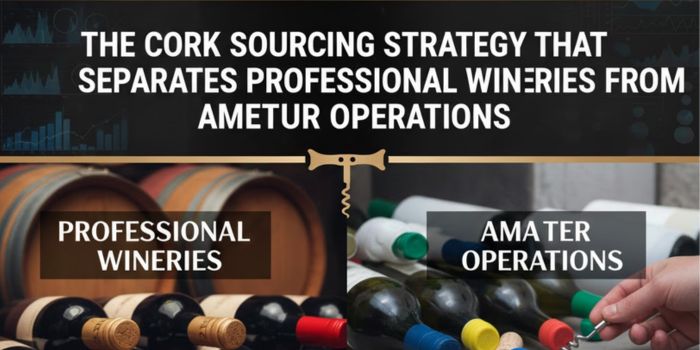
There’s something that happens when you visit a professional winery and get a glimpse of their production. There’s no panic two weeks before the bottling run for corks. There’s no frantic call to suppliers and settling for whatever remains. It’s almost as if their production schedule runs like clockwork, and that’s reflected in everything from their production to their finished product.
The differentiator between a polished-looking operation and one that looks like it’s constantly running behind includes the supply chain for packaging. At the crux of the supply chain is the decision that professional vintners need to make in how they’re going to source their closures.
Why Cork Sourcing Identifies Maturity in Your Operation
Here’s the problem: most new vintners don’t realize this until they’ve been burned enough times to learn. The cork isn’t just another component in production—it acts like a bulk material, and it needs the planning, storage, quality assurance, and purchasing consideration that aligns more with a piece of equipment than a one-off buy.
Amateur operations buy cork like they buy a case of bottles when they think they’re going to run short for a single batch. They assess need and find a supplier to give them what they need for their next run. Professional wineries think six months to one year ahead.
They have connections with suppliers who have bulk corks available at quality assurance levels. They buy them for cheaper, knowing they’ll use them all up together once the time comes. They have enough inventory that they don’t worry about running low on supply without a backup plan.
Just from a cash consideration perspective alone, it’s worth paying attention to this. One cork can cost the amateur anywhere from 30-40% more than buying them all at once, because that’s what a small operation does. For a winery producing even 5,000 cases a year minimum, that’s money left on the table, all money that could go toward better fruit, better equipment, or real marketing.
Why Quality Consistency Is Important but Never Discussed
But this isn’t the biggest problem. The biggest problem with sourcing corks willy-nilly is consistency. When you’re buying little bits from different suppliers or sporadically buying small orders, you’re getting different lots, maybe different quality levels, and most definitely varying storage conditions by the time they reach you.
Corks are natural products. They vary. Two shipments from the same supplier can perform differently if they were sourced one day and processed a week later instead of all at once. Professional wineries know this, which is why they order samples ahead of time before committing and work with suppliers who ensure their production levels/quality align with what professional wineries need across the year.
This matters more than people think. The ideal cork for your Chardonnay may not work at all for your Cab. The density, elasticity, moisture content, and absorbency all play a role in how well the cork performs over time. When you’re relying on little bits from different people with whatever stock they have available, you lose out on these elements. When you deal with a reputable supplier for volume orders, you have the ability to push for what you need and test it out beforehand before production begins.
Storage and Timeline Differentiation
Professional wineries also know that there’s a difference in timelines and consistent storage.
Quality cork suppliers aren’t Amazon with two-day delivery for 10,000 units. Depending on the time of year, order size, and specifications, one could find themselves waiting 4-8 weeks for delivery, or longer if they’re looking for specific customizations.
Professional operations build their production calendar around the cork supply timeline. They know how many units they’re going to need based on their bottling schedule and when they plan on bottling for any given year. They allow themselves a safety net when ordering, so if there are delays, it doesn’t set them back. They also have dedicated storage to keep corks safe (cool, dry situations without overpowering scents within proximity).
Amateur operations are frequently buying last-minute because they didn’t anticipate the need, throw corks wherever they have space (next to cleaning chemicals or boxes), and stress because they’re running out of options too quickly when it’s easily preventable.
Professional Cork Suppliers Are Partners in Quality Assurance
A professional supplier is no longer a supplier but instead, part of your packaging equity partner program, so to speak. Good cork suppliers help vintners select an ideal grade relative to your style, lend technical abilities should you experience issues down the line, and help determine an inventory management solution based on production needs.
These relationships take time to cultivate. They’re built on volume and consistency. A supplier cares about you differently when you’ve placed one big annual order than when you call them freaking out that you need 2,000 next Tuesday.
Professional wineries utilize these relationships for more than just corks as well; many suppliers provide access to other materials (all-in-one solutions), new product suggestions and testing procedures that help eliminate problems before they get to the bottle.
The Cash Consideration That Makes Sense
Yet at the end of the day, it comes down to cash flow. For many smaller operations, this is where it becomes harder to manage. How can an upstart come up with all the cash it needs for one year’s worth of corks without knowing whether prices will be high or sales low?
But generally speaking, it’s worth it in the end, better than expected if one calculates properly how much they’re spending up front versus how much they’ll ultimately save. Yes, you’re spending more at once. But you’re locking in a price, preventing per-unit costs from inflating due to reorders and eliminating any hidden fees, whether shipping costs or administrative times, or rush rates to either get production done timely or time lost due to planning errors.
Smart wineries act like any other business when it comes to bulk materials and packaging supplies; they do turnover rate assessments and determine under what circumstances they’ll order a volume that’s best for cash flow and project efficiency over time. It’s not about ordering the maximum volume possible; it’s about finding what works best for real use, but has enough padding should an unforeseen opportunity arise.
How It Works IRL
It’s not hard to assess packaging material for corks if you’re running even a 2,000-case producer. Clear estimates over 12 months of one’s production schedule should dictate accessible options with reliable suppliers who can meet demand with quality standards over time and help maintain price levels because you’re interested in accessibility over annual supply versus quarterly needs.
It’s not hard to believe that with proper storage space dedicated to corks, kept cool and dry with the proper amount of time allotted before delivery, production can move smoothly through assessing how much is needed before sample sizing from a reputable supplier procured on relationships forged through volume needs instead of last-minute oversights.
Most importantly, it’s easy to see how those professional operatives treat packaging assumptions as strategic efforts instead of tactical thoughts, they’re the ones who appear polished when talking on behalf of wholesalers, buyers or consumers, they’re the ones who find themselves able to expand operations without chaos, continue functioning at quality levels regardless of upscaling and create names for themselves as reputable partners.
It’s just a cork, but it’s how you source one that makes all the difference as a business owner.